You can share
- Share to Facebook
- Share to Google+
- Subscribe to our
- Share to Linkedin
- Share to Twitter
You can share

Custom metal keychains remain one of the highest-performing categories in B2B branded merchandise because they bridge the critical gap between daily functional utility and long-term tactile brand exposure. According to the Advertising Specialty Institute (ASI) Global Ad Impressions Study, promotional keychains and everyday carry (EDC) metal accessories generate an average of 3,400 lifetime impressions throughout their lifespan, with over 85% of recipients retaining them for more than one year specifically because of their daily practical utility.
In an era where disposable plastic giveaways are increasingly rejected by corporate buyers and consumers alike, premium metal keychains—manufactured from die-cast zinc alloy, stamped brass, or stainless steel—deliver substantial perceived value, physical permanence, and a surprisingly low cost-per-impression (CPI). Whether deployed as corporate onboarding tokens, automotive customer appreciation gifts, trade show commemorative merchandise, or real estate handover keepsakes, precision-crafted keychains reinforce brand recognition every time a recipient reaches for their keys. This comprehensive B2B procurement guide examines the structural mechanics of keychain retention, compares core metal casting and finishing techniques, outlines multi-functional design strategies, and provides an actionable quality assurance framework for global sourcing managers.
Corporate promotional campaigns often suffer from “drawer rot”—the tendency for branded novelties to be discarded or buried in a desk drawer within 48 hours of receipt. In contrast, items that enter a recipient’s Everyday Carry (EDC) ecosystem achieve continuous, active physical engagement.
Research from the Promotional Products Association International (PPAI) reveals three distinct factors governing promotional merchandise longevity:
High Daily Touchpoint Frequency: The average professional interacts with their primary keyring between 6 and 14 times per day. Each interaction represents an unforced, ambient visual and tactile reminder of the sponsoring organization.
Tactile Weight and Material Sensation: Weight is psychologically correlated with value. A precision die-cast zinc alloy keychain weighing 35–60 grams communicates structural integrity and durability in a way that lightweight plastics or stamped aluminum cannot replicate.
Low Disposal Propensity: Because keychains serve as secure anchors for valuable personal assets (home keys, vehicle transponders, office access fobs), recipients are intrinsically reluctant to dispose of a well-engineered metal keychain.
For international brand managers and enterprise procurement teams, partnering with an experienced custom keychain manufacturer ensures that promotional hardware meets both functional load requirements and brand aesthetic standards.
Selecting the optimal manufacturing method dictates not only unit cost and tooling investments but also the physical fidelity of your corporate identity.
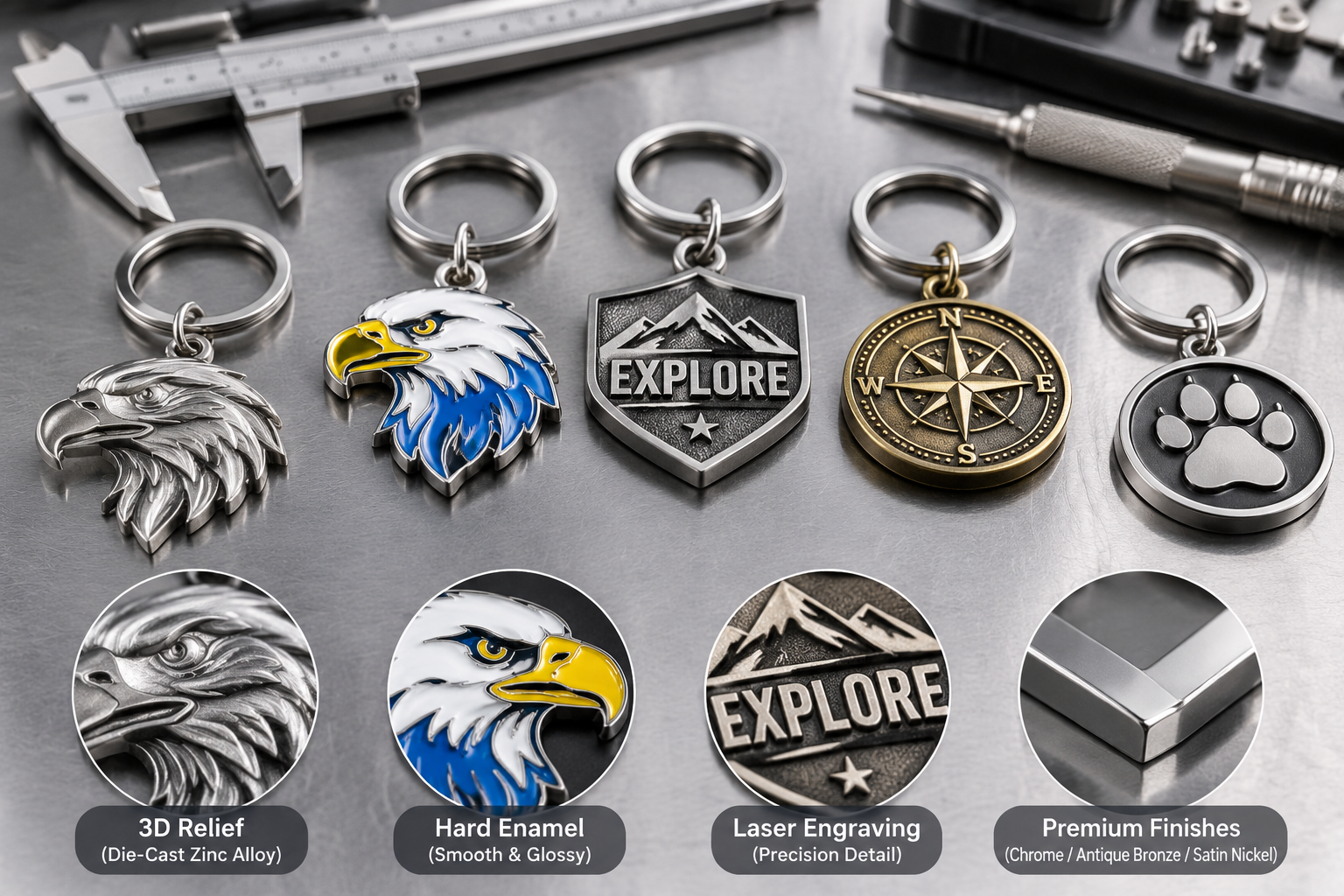
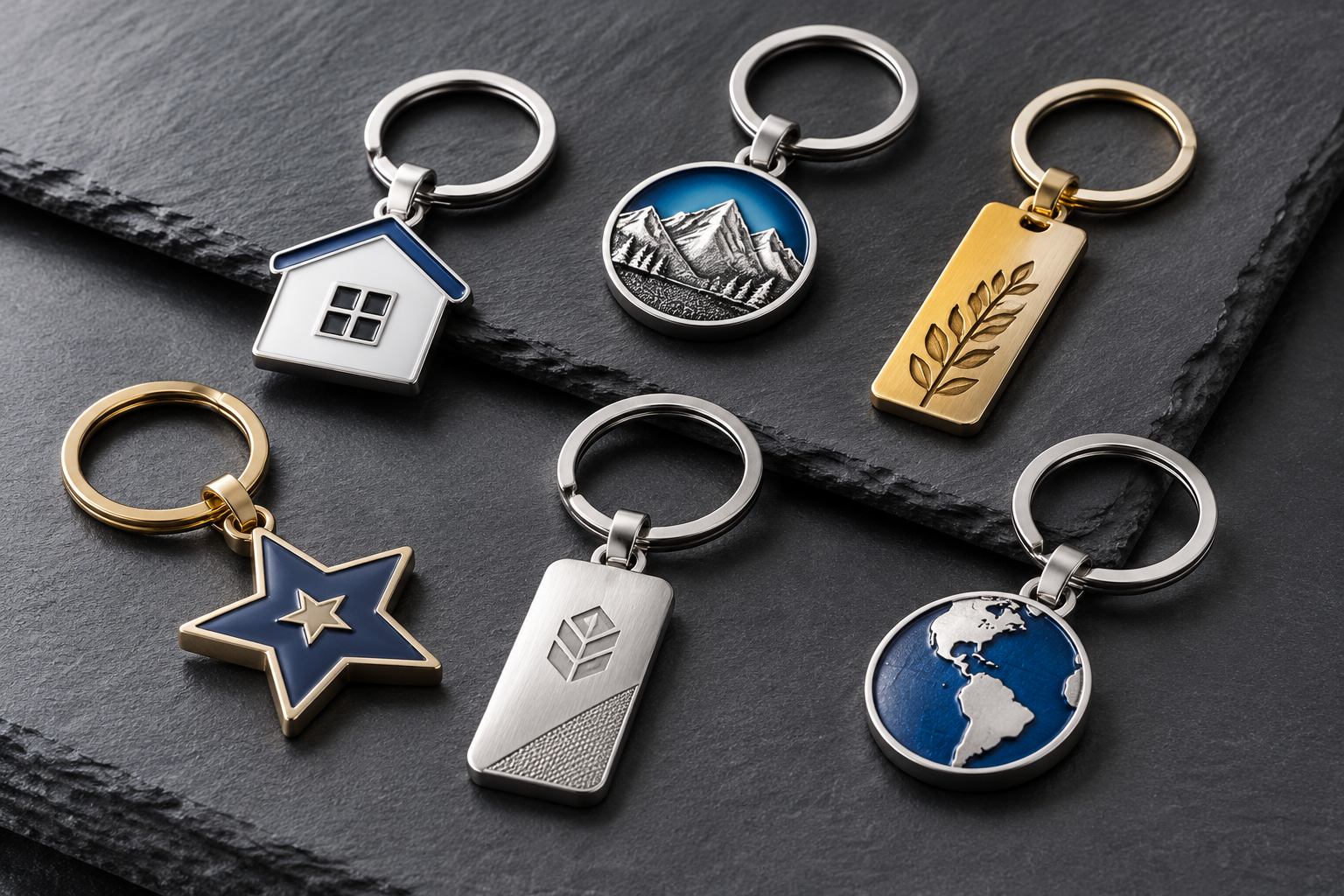
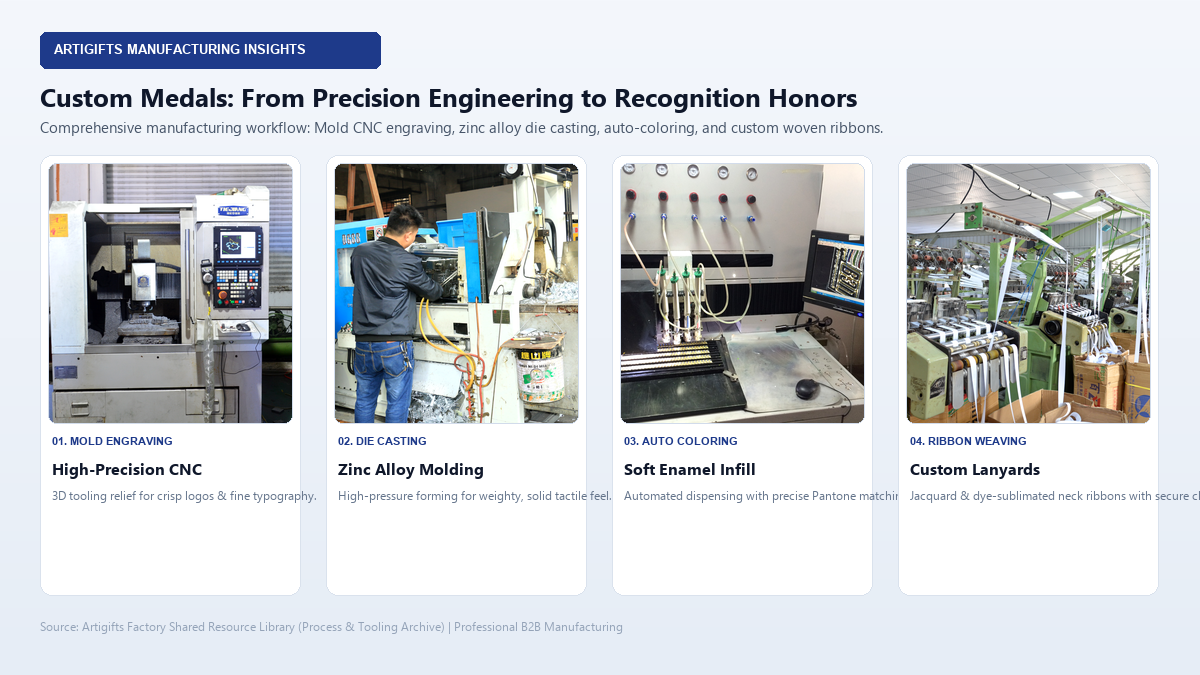
Zinc alloy (typically Zamak #3 or Zamak #5) is the industry benchmark for modern promotional keychains. Injected under high pressure (15–20 MPa) into CNC-machined steel molds, zinc alloy allows for intricate 3D sculptural contours, multi-tiered dimensional reliefs, cutout apertures, and embedded functional components.
Best suited for: 3D automotive emblems, architectural logos, character mascots, and ergonomic contoured fobs.
Dimensional capability: Tolerances within ±0.05 mm, accommodating complex curves and chamfered bevels.
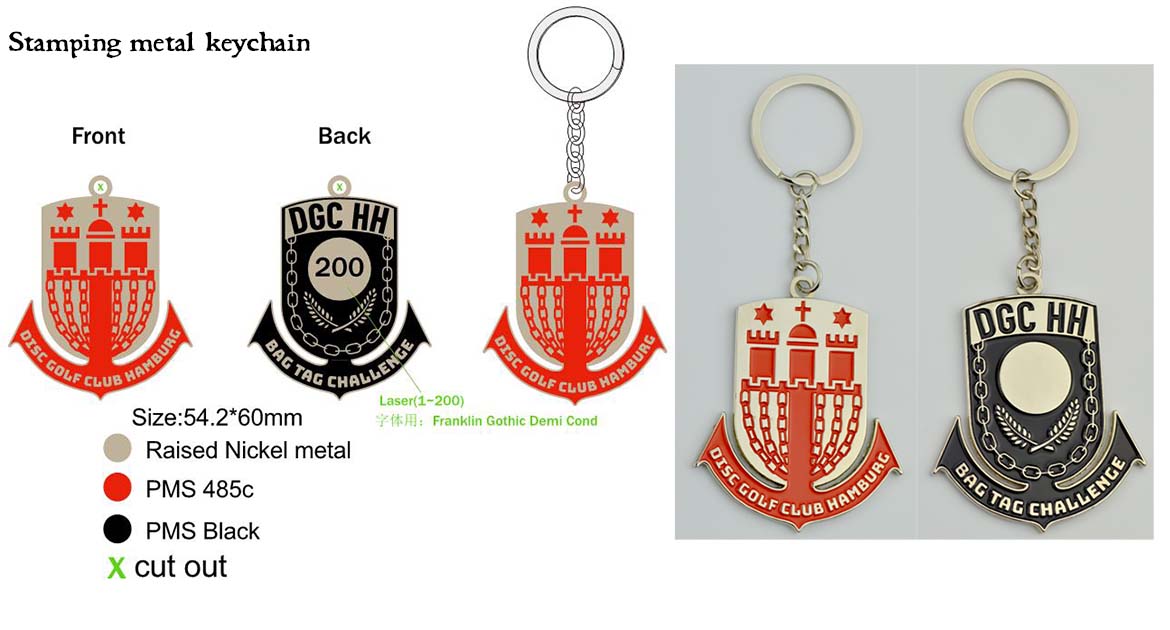
Hydraulic stamping strikes solid brass or iron sheet under 100–300 tons of pressure. The resulting impressions feature razor-sharp geometric edges and deep recesses ideal for enamel color fill.
Best suited for: Heritage crests, military/service insignias, formal corporate seals, and antique-finished commemorative tokens.
Soft Enamel: Liquid colored epoxy is dispensed into recessed metal wells and baked. The metal ridges remain raised above the enamel surface, creating a distinct tactile texture. An optional clear epoxy dome can be applied for added scratch protection.
Hard Enamel (Imitation Cloisonné): Resin-based enamel paste is filled above the metal ridges, baked at high temperatures (approx. 160°C), and then precision-ground flush and polished. The result is an ultra-smooth, jewelry-grade luster with exceptional resistance to everyday abrasion.
For serialized numbering, individual recipient personalization, or fine typography that exceeds casting tolerances, fiber laser engraving provides micro-precision permanent markings without compromising surface electroplating.
While aesthetic craftsmanship creates initial appeal, multi-functional utility transforms a decorative keychain into an indispensable daily tool.
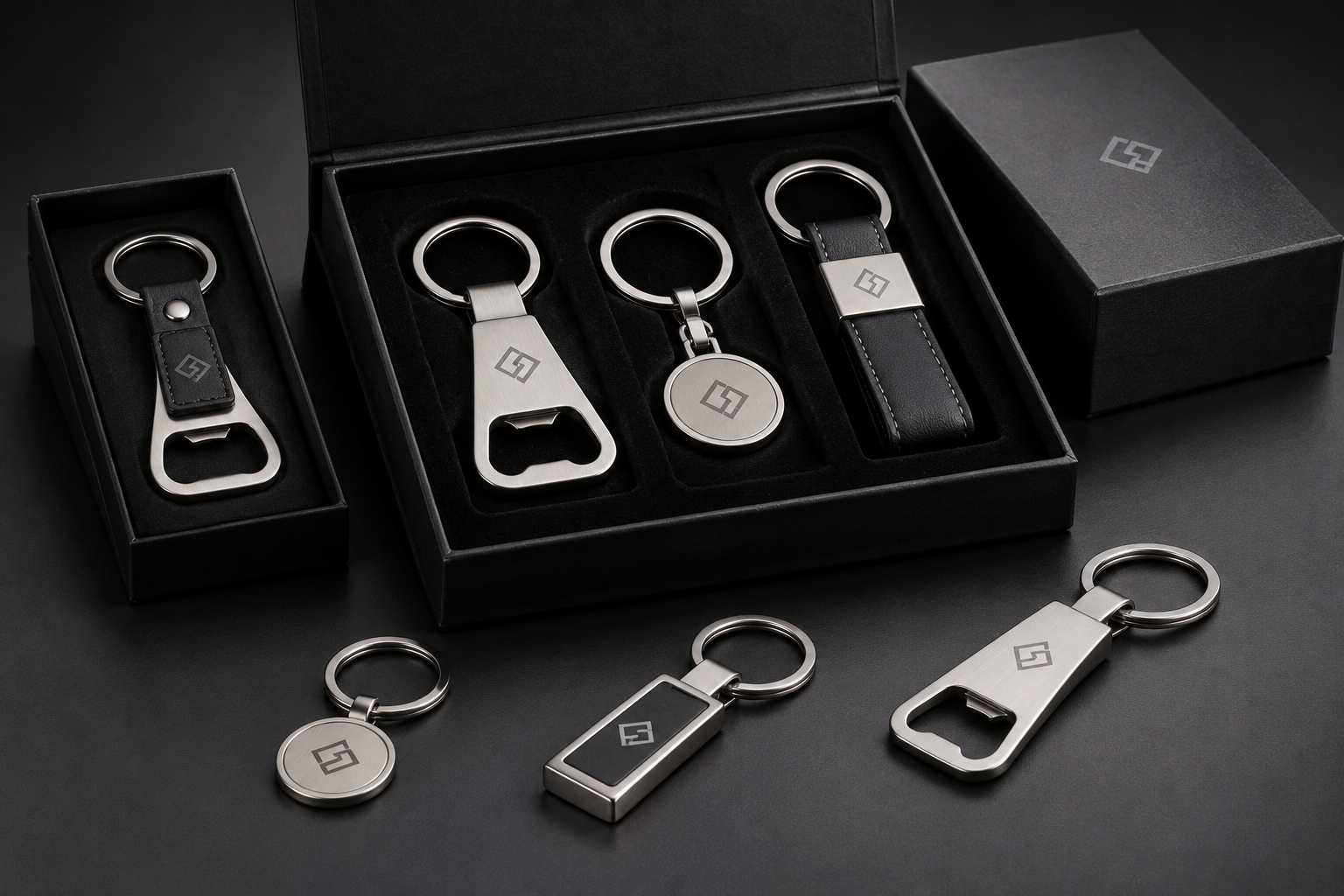
Industry data confirms that multi-purpose promotional accessories achieve 42% higher retention rates than single-purpose decorative tags. Leading B2B applications include:
Integrated Bottle Opener Keychains: Precision-engineered leverage notches seamlessly integrated into the zinc alloy silhouette, providing reliable uncapping torque without distorting the emblem.
Shopping Cart / Trolley Token Keychains: Removable or fixed coin-sized tokens (calibrated to Euro, GBP, or US coin dimensions) that eliminate daily friction for retail shoppers.
Dual Metal-and-Leather Fobs: Premium top-grain or vegan PU leather straps paired with heavy die-cast metal hardware, providing executive appeal for luxury automotive dealerships, aviation clubs, and financial institutions.
Tech-Integrated Smart Fobs: Incorporating NFC microchips, QR code reverse engravings, or phone stand contours to bridge physical merchandise with digital landing pages or corporate directories.
| Process & Material | Dimensional Capability | Color Options | Surface Durability | Tooling Investment | Recommended B2B Application |
|---|---|---|---|---|---|
| Die-Cast Zinc Alloy (3D) | Full 3D sculptural relief, cutouts, curves | Soft enamel, glitter, print overlays | ★★★★☆ (High abrasion resistance) | Moderate ($80–$180 mold fee) | Automotive, character mascots, multi-tool keychains |
| Die-Struck Brass (Hard Enamel) | 2D/2.5D sharp planar reliefs | Flat-polished hard enamel (Pantone matched) | ★★★★★ (Jewelry-grade, scratch-proof) | Moderate ($100–$220 die fee) | Luxury corporate gifts, anniversary milestones, executive programs |
| Die-Struck Iron (Soft Enamel) | Crisp 2D relief with raised ridges | Recessed soft enamel + optional epoxy | ★★★☆☆ (Standard wear resistance) | Low ($60–$120 die fee) | High-volume trade show giveaways, promotional campaigns |
| Stainless Steel / Aluminum (Laser Etched) | Flat sheet profile, ultra-thin (1.2–2.0mm) | Surface anodizing, color laser annealing | ★★★★☆ (Corrosion-proof, lightweight) | Minimal / None (Digital setup) | Industrial equipment tags, tech merchandise, luggage tags |
| Zinc Alloy + Genuine / PU Leather | 3D metal crest mounted on stitched strap | Debossed leather + plated metal emblem | ★★★★★ (Executive luxury feel) | Combined tooling ($120–$250) | Real estate closing gifts, luxury automotive handover sets |
To safeguard brand reputation and prevent premature product failure, international buyers must establish rigorous quality verification protocols before authorizing bulk shipment.
Keychains constantly rub against abrasive door keys and are exposed to ambient moisture and skin oils. Plating quality determines whether a keychain maintains its shine or tarnishes into a dull grey substrate.
Standard Protocol: Demand ASTM B117 salt spray testing (minimum 24 hours for standard commercial grade, 48–72 hours for premium automotive grade) to verify nickel, chrome, or gold plating integrity.
The attachment hardware is the primary point of physical failure.
Verification: Ensure split keyrings use heat-treated spring steel or hardened zinc alloy jump rings capable of withstanding 15–20 kg of direct tensile pull force without permanent deformation.
Standard Protocol: Enamel fills must be matched against standard Pantone Matching System (PMS) swatches with a Delta-E color variation under 1.5, inspected under standard D65 commercial lighting booths.
Protocol: Cross-hatch adhesion testing (ASTM D3359) ensures electroplated coatings will not flake or peel when subjected to daily frictional impact.
Protocol: High-speed tumbling and robotic hand-polishing must eliminate all casting flash, sharp sprues, or burrs, ensuring a smooth, tactile hand-feel that will not scratch clothing or car dashboards.
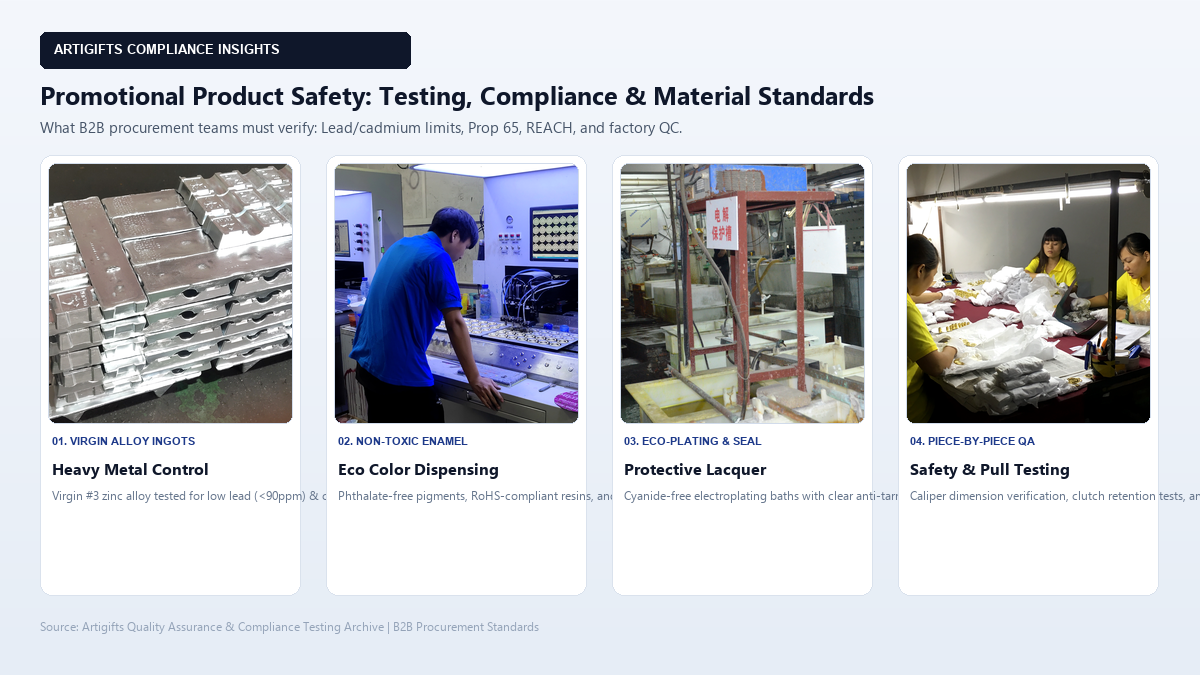
Protocol: Ensure all metal alloys and surface coatings comply with EU REACH Annex XVII, RoHS directives, and California Proposition 65 limits for lead (≤90 ppm) and cadmium (≤100 ppm).
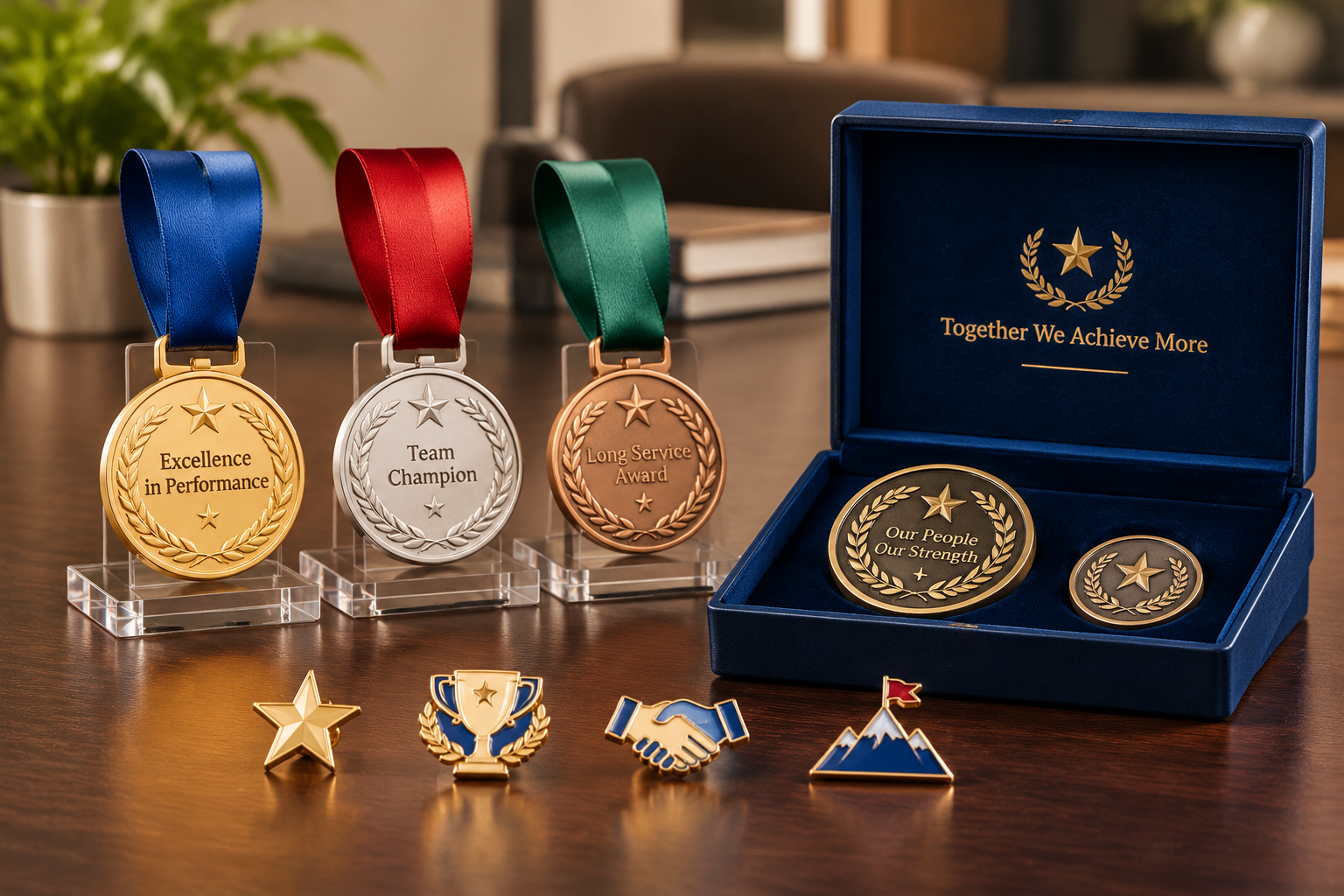
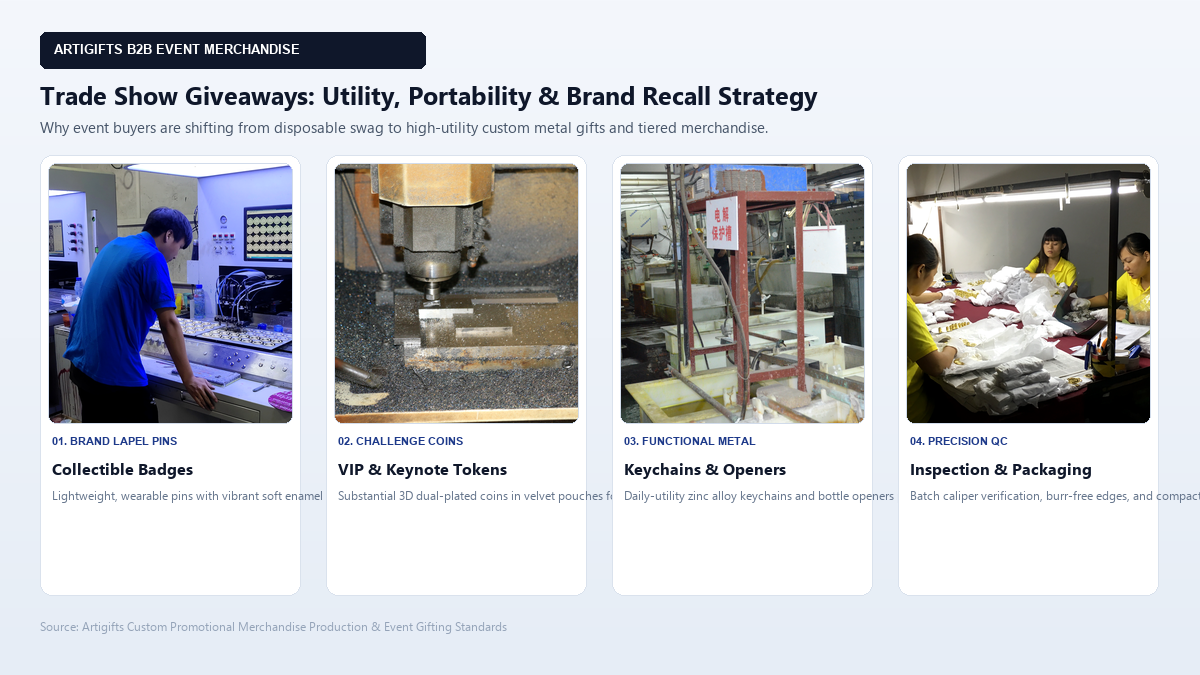
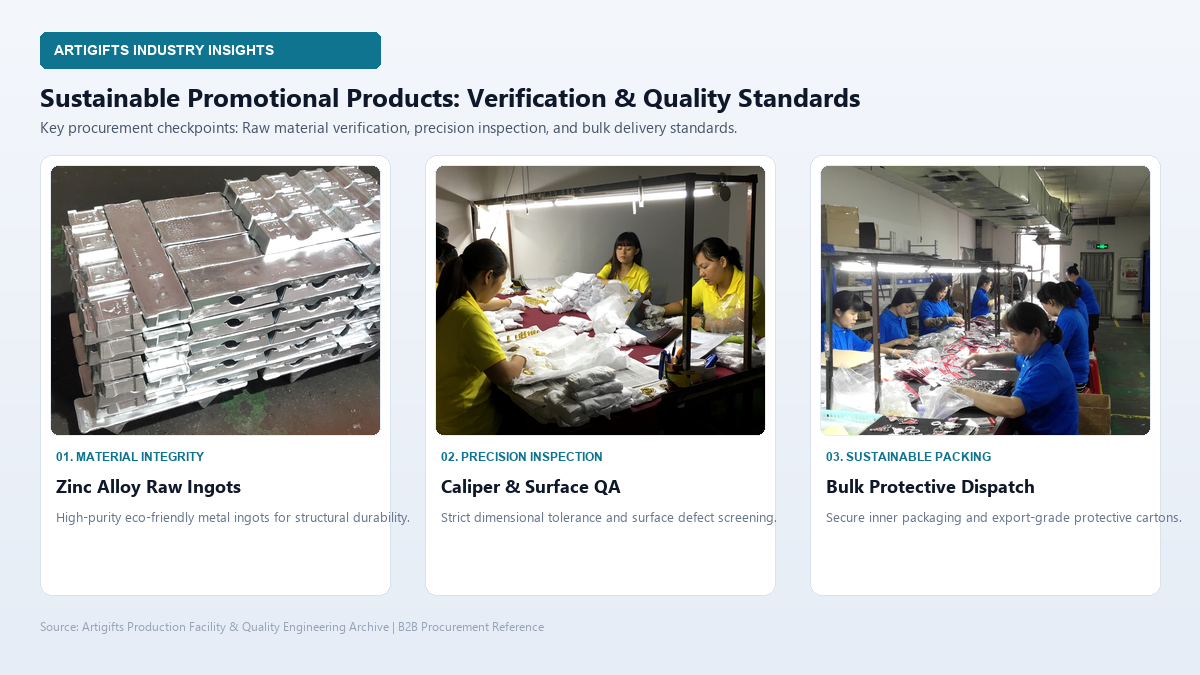
At Artigifts’ manufacturing facilities, integrated quality control protocols ensure that custom medals, commemorative coins, lapel pins, and custom metal keychains undergo rigorous batch testing before international dispatch.
Packaging elevates perceived value and bridges the gap between mass promotional merchandise and executive corporate gifting.
Standard OPP Polybags: Cost-effective, transparent individual bagging for high-volume trade show distribution.
Branded Backing Cards (350–400 gsm Art Paper): Provides vital real estate for corporate storytelling, sustainability statements, warranty information, or QR codes.
Velvet Drawstring Pouches: Soft tactile presentation popular for retail merchandise, jewelry accessories, and festival souvenirs.
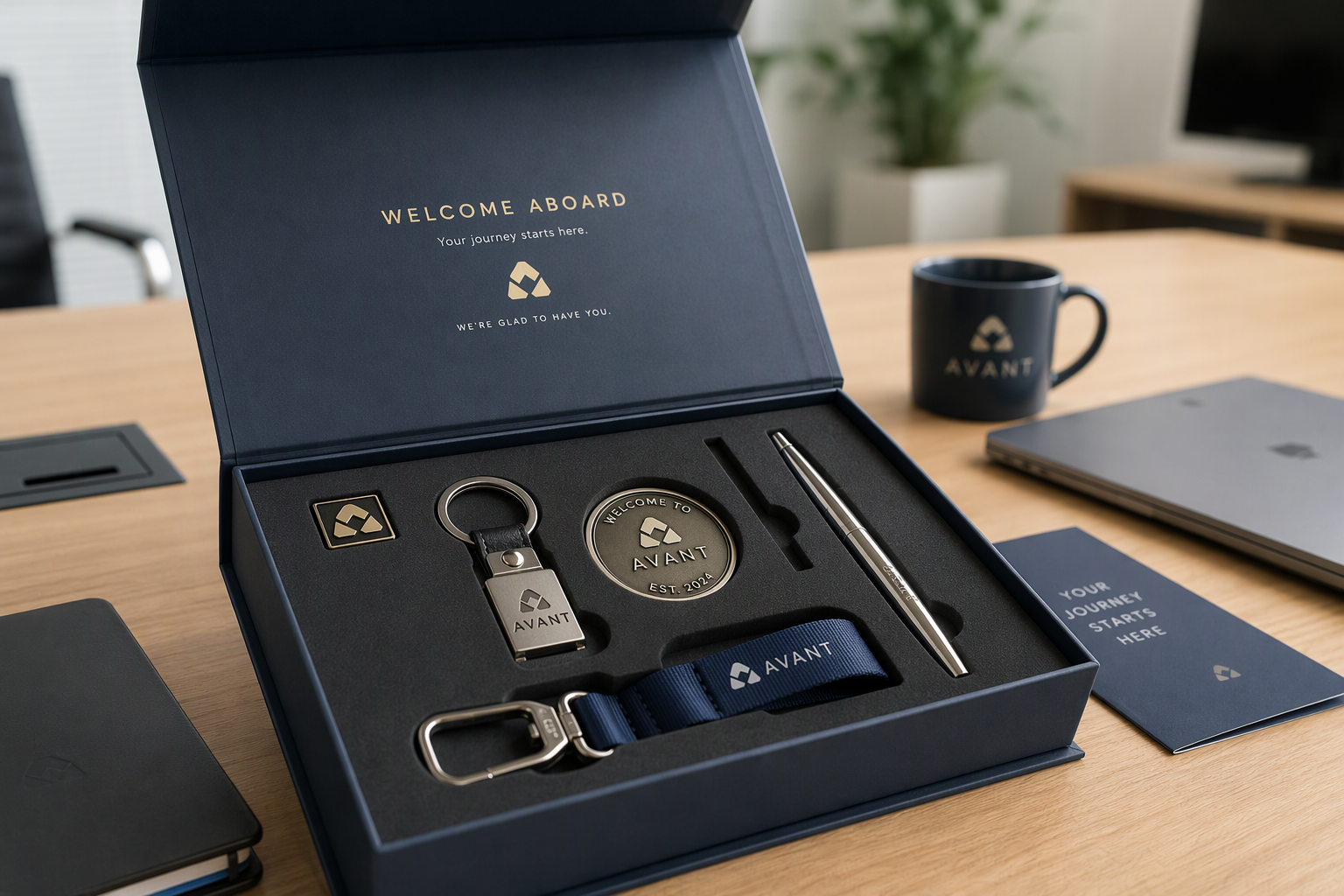
Custom Rigid Gift Boxes with Custom-Die-Cut EVA Foam: Magnet-closure or two-piece matte black boxes lined with high-density EVA foam molded exactly to the keychain silhouette, creating an impactful executive unboxing experience.
Die-cast zinc alloy and die-struck brass are the most durable metals. Zinc alloy provides superior structural strength and 3D detailing flexibility without excessive weight, while brass offers jewelry-grade density and exceptional corrosion resistance when paired with hard enamel.
Standard factory MOQ for custom die-cast metal keychains typically starts at 100 to 300 pieces per design. Tooling and pre-production sampling generally require 7 to 10 working days, followed by 15 to 20 working days for mass production and electroplating, depending on order volume and packaging complexity.
Soft enamel is applied into recessed areas, leaving the metal outlines raised, creating a textured 2D/3D tactile feel. Hard enamel is baked and machine-polished flush with the metal surface, resulting in an ultra-smooth, scratch-resistant, mirror-like finish that offers superior longevity for daily carry items.
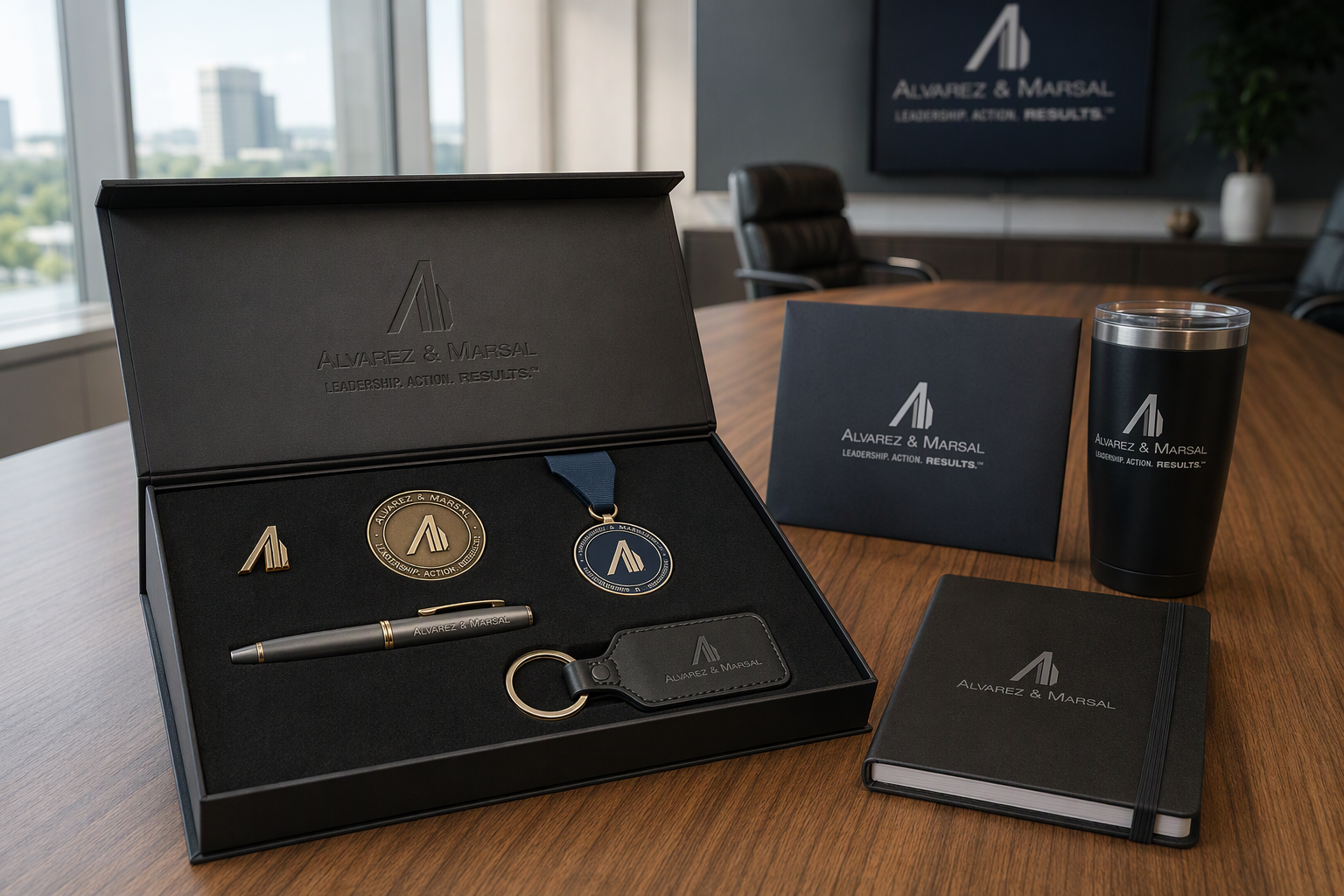
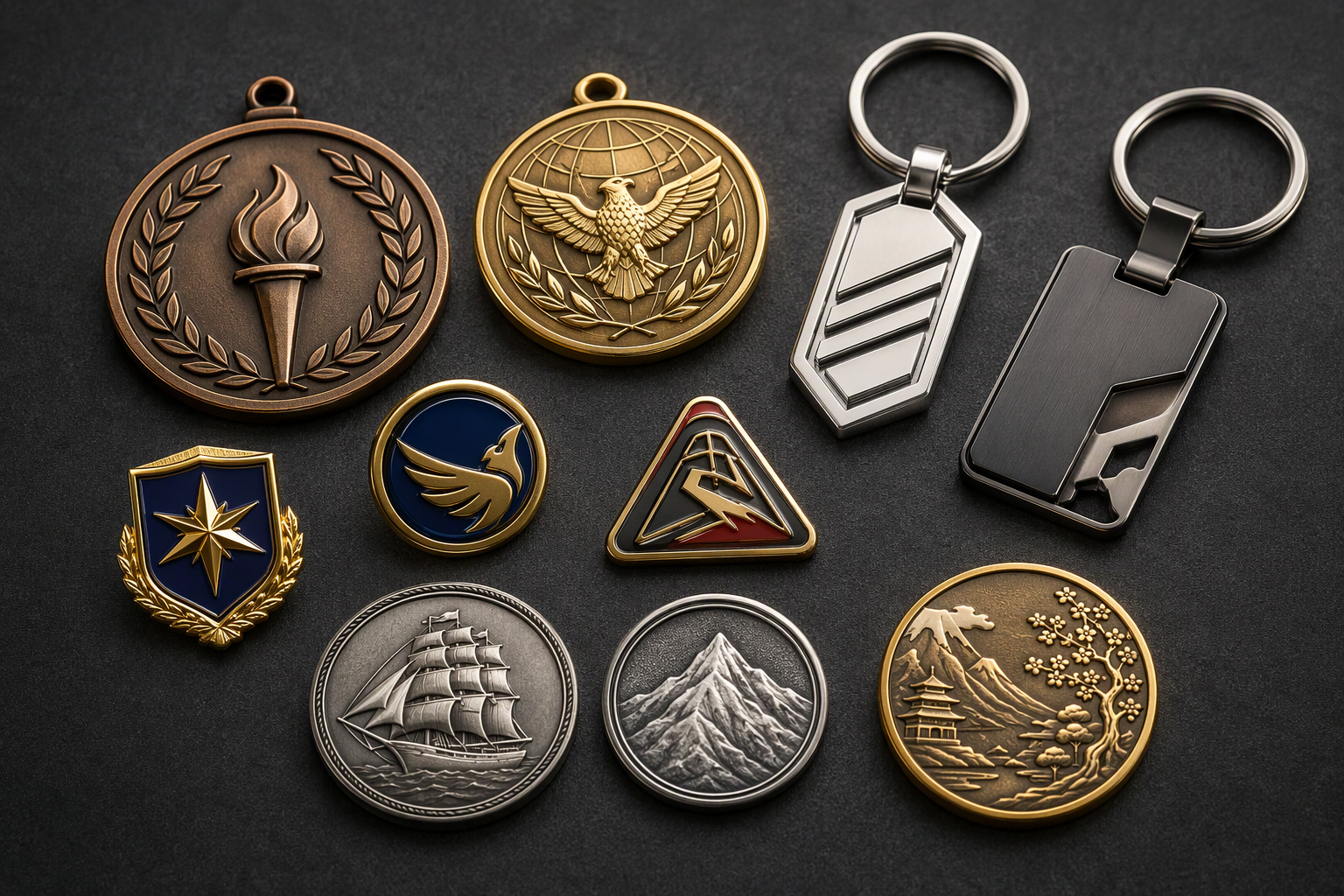
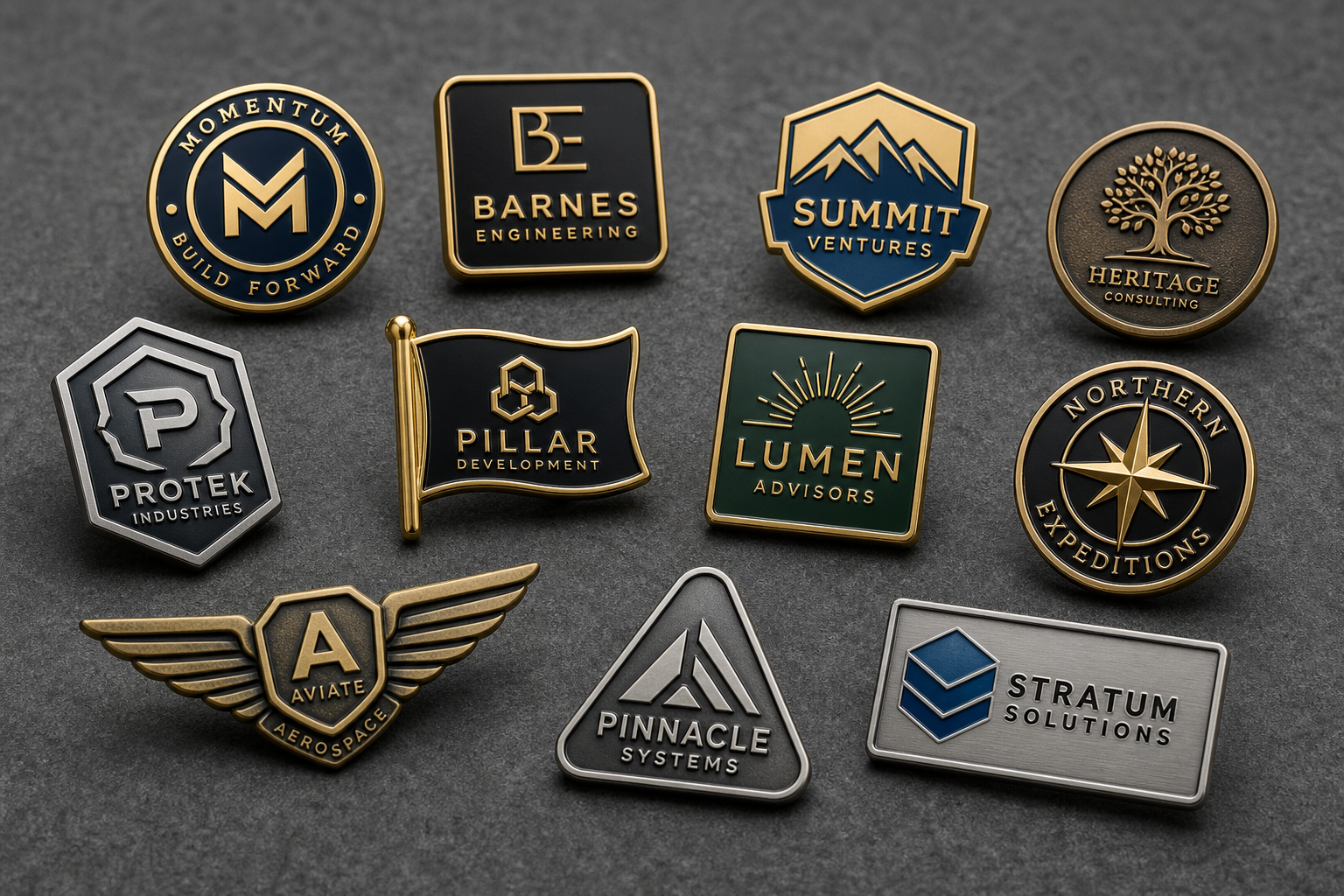
Custom metal keychains share identical electroplating finishes (shiny gold, antique bronze, satin nickel) and enamel formulations with custom lapel pins, commemorative challenge coins, and award medals. Sourcing teams can create unified, multi-piece corporate gift sets using harmonized metal finishes and branded packaging.
Yes. Using high-precision fiber laser engraving, manufacturers can apply unique serial numbers, employee names, membership IDs, or vehicle identification codes onto the reverse or edge of each keychain after electroplating.
Standard commercial electroplating options include shiny nickel (silver), shiny gold, antique bronze, antique brass, antique copper, satin/matte nickel, gunmetal black, and vibrant rainbow anodized PVD coatings.
Yes, reputable manufacturers utilize lead-free and nickel-release-compliant alloys that adhere to European REACH regulations, US CPSIA guidelines, and California Proposition 65 limits, ensuring safety for daily tactile handling.
Custom metal keychains deliver an unmatched combination of functional daily utility, tactile permanence, and compounding brand impressions. By moving away from disposable plastic novelties and investing in precision-engineered zinc alloy, hard enamel craftsmanship, and multi-functional features, corporate procurement managers can ensure high retention rates and strong promotional ROI.
When planning your next corporate merchandise or customer recognition program, establish clear specifications for material alloy, plating salt-spray resistance, Pantone color fidelity, and presentation packaging. To explore custom metal gift capabilities, review manufacturing processes, and request tailored B2B quotations, visit Artigifts or explore our complete About Us and manufacturing overview.