You can share
- Share to Facebook
- Share to Google+
- Subscribe to our
- Share to Linkedin
- Share to Twitter
You can share


Sustainable promotional products are becoming a more demanding procurement category. Buyers are no longer evaluating only whether an item is made with a recycled or plant-based material; they also need to ask whether the product is durable, properly documented, suitable for the intended audience and supported by credible environmental claims.
PPAI Research’s 2026 industry analysis identifies sustainability and compliance as an important area for promotional product companies. In the research cited by PPAI, 76% of consumers said sustainability influences whether they keep or use a product, while 34.4% of suppliers reported more requests for documentation, testing, PFAS disclosure and ESG materials. These findings come from PPAI’s research programs and industry surveys, not from a universal global market sample, but they show why sustainability questions are becoming more practical for buyers.
For procurement teams, the most reliable approach is simple: verify the claim, evaluate the product’s useful life, confirm the documentation and review the full delivery system before approving a bulk order.
The conversation is moving from a single material claim to a broader product assessment. A “sustainable” promotional item should be evaluated through several connected questions:
PPAI’s 2026 research reports that consumers judge product value through durability, design and material quality. The same research says 60% of buyers cut quantity first when budgets tighten, while only 11% cut customization. For a branded merchandise program, this suggests that a smaller quantity of better-considered products may be more useful than a larger quantity of disposable items. The result still depends on the campaign, audience and budget; the data should not be treated as a universal purchasing formula.
Before placing an order, separate a supplier’s general marketing language from evidence that applies to the specific product, material and destination market.
| Verification area | Questions to ask the supplier | Why it matters |
|---|---|---|
| Material | What is the exact material, composition and finish? Is recycled or bio-based content documented? | A broad material label may not explain the actual product composition. |
| Durability | How will the item be used, stored and reused? What parts are most exposed to wear? | A product that is discarded quickly may not support the intended sustainability objective. |
| Testing | What product-safety or chemical testing is available for this product and market? | Requirements can vary by product category and destination. |
| Environmental claims | Which claim is supported by a certificate, test report, chain-of-custody document or other evidence? | Buyers need to distinguish a documented claim from a general adjective. |
| Packaging | What packaging materials are used, and can unnecessary packaging be reduced? | Packaging affects the overall procurement decision and distribution footprint. |
| Traceability | Can the supplier identify the production location and provide the required order documentation? | Traceability helps buyers respond to internal ESG and compliance reviews. |
The correct documentation depends on the product, destination and buyer requirements. A supplier should not promise that one certificate or label automatically satisfies every market.
Sustainability is not only a material question. It is also a design and usage question. A useful product with a durable finish has a better chance of remaining in circulation than an item that is difficult to use or does not fit the recipient’s needs.
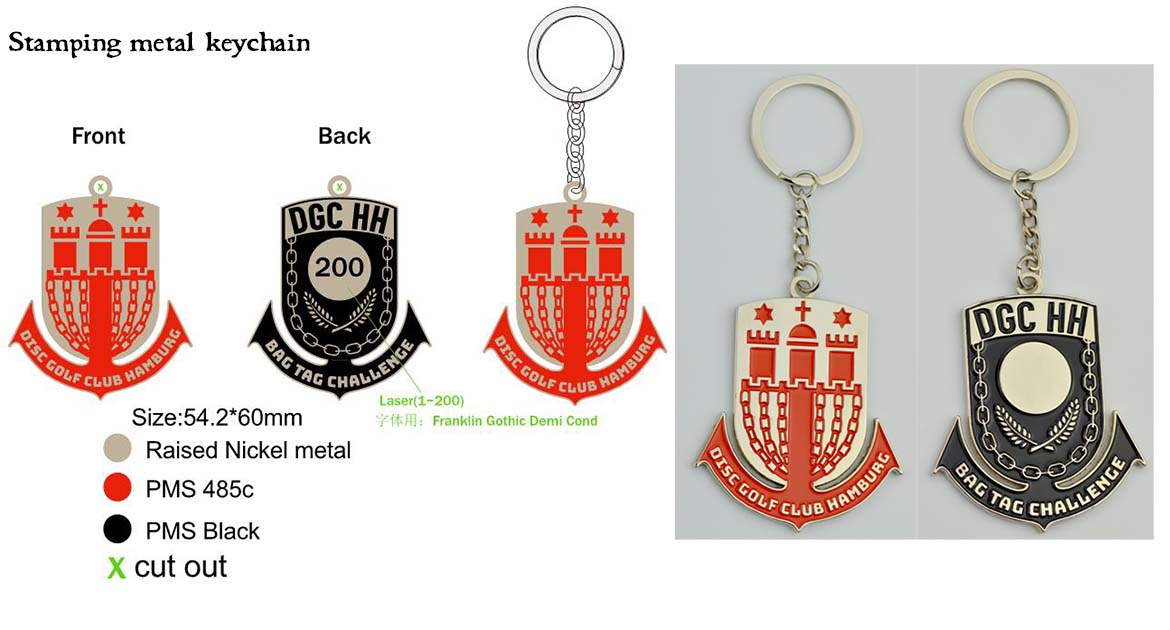
For custom metal products such as medals, lapel pins, coins and key chains, buyers should review:
Artigifts describes its product range as including lapel pins, key chains, medals, coins, belt buckles, zinc alloy or pewter souvenirs, embroidered patches and lanyards. Its About Us page also describes engraving, printing, special packaging and branded collections as part of its service scope. These capabilities can support different recognition and promotional programs, but the appropriate material, finish, packaging and documentation still need to be confirmed for each individual order.
A sustainable promotional product program should connect design decisions with procurement evidence. The following questions can be included in a supplier brief:
The purpose of these questions is not to make every project unnecessarily complicated. It is to identify the evidence needed before a claim is published internally or externally.
Avoid using words such as “green,” “eco-friendly,” “sustainable” or “non-toxic” as standalone proof. Instead, connect each claim to a defined product fact and a source of evidence.
A safer content pattern is:
Claim: Identify the specific material, process or packaging feature.
Evidence: State which document, test, certification or supplier record supports it.
Scope: Explain which product, order, market or date the evidence applies to.
Limit: Avoid implying that one feature proves the entire product has no environmental impact.
PPAI’s sustainability guidance notes that ecolabels and certifications can help buyers narrow choices, but labels should still be evaluated carefully. Buyers should check who issued the label, what it covers, whether it applies to the exact product and whether it remains valid for the relevant procurement period.
Packaging should protect the product, support the brand experience and avoid unnecessary materials. The right solution depends on the item and delivery route, so procurement teams should compare:
For a collection of custom pins, medals, coins or corporate gifts, packaging can also help maintain a consistent visual identity. However, a more elaborate package is not automatically more sustainable. The packaging decision should be linked to actual protection, reuse, distribution and communication needs.
PPAI’s 2026 analysis describes a market in which buyers are placing greater emphasis on design, durability and material quality. For corporate gifting and recognition programs, this supports a practical shift from “more items” to “better-matched items.”
A recognition program may benefit from:
Artigifts’ product categories can be considered across these use cases. The final choice should be based on the campaign purpose, audience, design, material evidence, decoration method, packaging and destination-market requirements—not on a generic sustainability label alone.
Before approving a supplier or bulk order, confirm the following:
No. Sustainability should be evaluated through the product’s material, useful life, design, packaging, documentation and intended use. Recycled content can be relevant, but it is not the only factor.
Ask for the exact material description, available testing or documentation, decoration method, packaging plan, sample approval process and information that supports any environmental claim.
Confirm who issued the label, what it covers, whether it applies to the exact product and whether it is valid for the intended market and procurement period. Do not assume that every label covers the full product lifecycle.
They can be, depending on the material, design life, usefulness, decoration, packaging and evidence available for the specific order. The procurement decision should be based on documented requirements rather than the product category alone.
PPAI’s 2026 research reports that 60% of buyers cut quantity first when budgets tighten, while only 11% cut customization. This is an industry research finding, not a universal rule. Each organization should compare campaign reach, product usefulness, quality and budget before deciding.
No. Packaging is one part of the assessment. Buyers should also evaluate the product’s material, durability, use case, decoration, testing and supporting documentation.
Not by itself. A general statement should be supplemented with product-specific information and documentation relevant to the claim, destination market and procurement scope.
The most reliable way to buy sustainable promotional products is to replace vague environmental language with a documented procurement checklist. Verify the material, assess usefulness and durability, confirm testing and environmental evidence, review packaging and keep the final marketing claim within the evidence available.
For custom medals, lapel pins, coins, key chains, lanyards and related corporate gifts, this approach helps buyers build programs that are better aligned with their audience, brand identity and procurement requirements.