You can share
- Share to Facebook
- Share to Google+
- Subscribe to our
- Share to Linkedin
- Share to Twitter
You can share

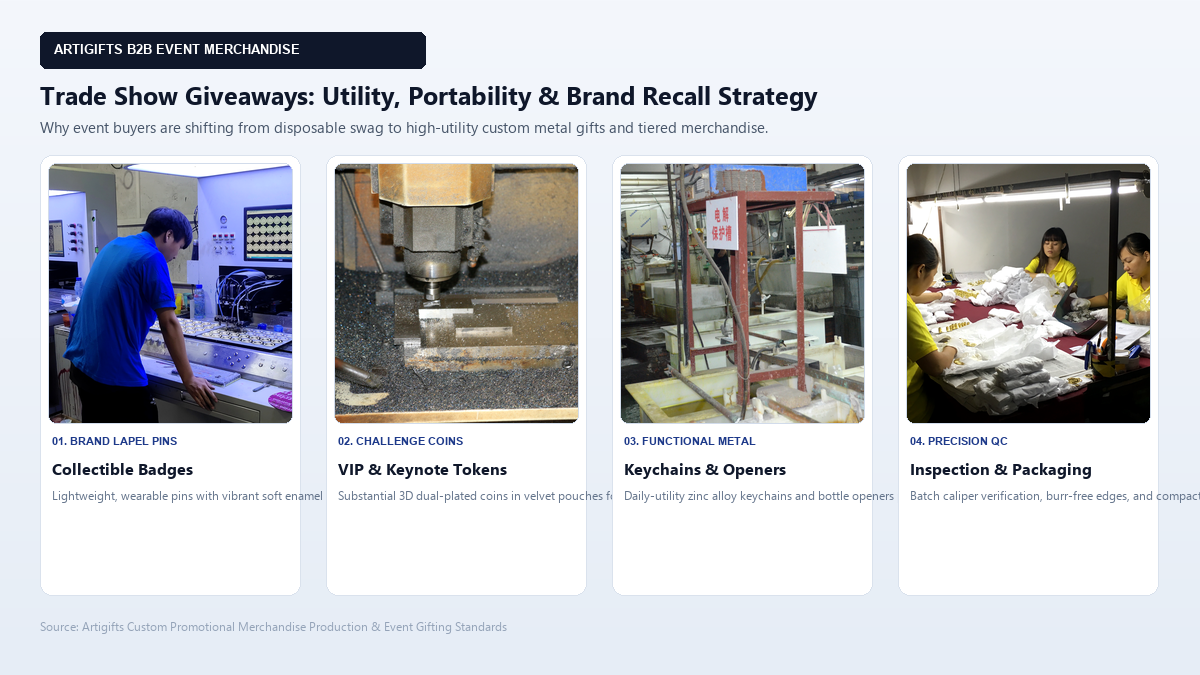
Trade show giveaways are undergoing a decisive shift from disposable plastic novelties to high-utility, brand-specific merchandise that attendees actively keep and use. In today’s competitive exhibition landscape, corporate marketing teams and B2B event organizers can no longer afford to measure trade show success solely by the volume of items handed out at the booth. Distributing generic, low-quality trinkets results in immediate post-show disposal, wasted marketing budgets, and diluted brand perception.
According to research from the Promotional Products Association International (PPAI) and the Incentive Research Foundation (IRF), B2B buyers and event attendees overwhelmingly favor durable, well-crafted, and easily portable items. By implementing a tiered event merchandise strategy—combining accessible booth conversation starters like custom enamel lapel pins and functional metal keychains with premium commemorative tokens for qualified leads—exhibitors can dramatically increase booth engagement, protect travel logistics, and generate lasting brand recall long after the exhibition floor closes.
For decades, the standard playbook for trade show exhibiting involved ordering thousands of inexpensive, generic items—such as flimsy pens, foam stress balls, or plastic wristbands—and scattering them across the front counter. However, shifts in attendee expectations, corporate sustainability mandates, and tighter travel constraints have rendered this approach obsolete.
Every business traveler experiences the “hotel room filter” on the final evening of a conference: attendees sort through accumulated booth items, deciding what fits into their carry-on luggage and what gets discarded into the hotel wastebasket. Bulky, fragile, or low-perceived-value items are the first to be abandoned. Compact, durable metal items with tangible weight and fine craftsmanship consistently survive this filter and make the journey back to corporate offices.
Organizations investing tens of thousands of dollars in booth design, keynote sponsorships, and team travel cannot afford the reputational risk of associating their logo with disposable waste. Sourcing durable, recyclable metal promotional items reinforces a brand's commitment to quality, environmental responsibility, and thoughtful procurement.
PPAI Research indicates that when event marketing budgets face scrutiny, over 60% of procurement teams choose to reduce order quantities rather than sacrifice product quality or customization depth. Exhibitors are realizing that giving 500 meaningful, well-targeted gifts yields higher qualified pipeline conversion than distributing 5,000 throwaway items to passersby.
Recent industry data provides clear empirical evidence for why product utility and aesthetic value drive promotional marketing ROI:
High Retention Rates: PPAI’s Product Power 2026 consumer research highlights that 83% of recipients feel appreciated when receiving well-designed promotional products, and 65% retain high-quality branded merchandise for six months or longer.
Persistent Brand Recall: Research shows that 72% of recipients associate durable branded products with positive brand attributes such as reliability, innovation, and trust.
Daily Functional Exposure: Desk accessories, pocket keychains, bottle openers, and wearable lapel badges generate hundreds of organic brand impressions per month across colleagues, clients, and industry peers.
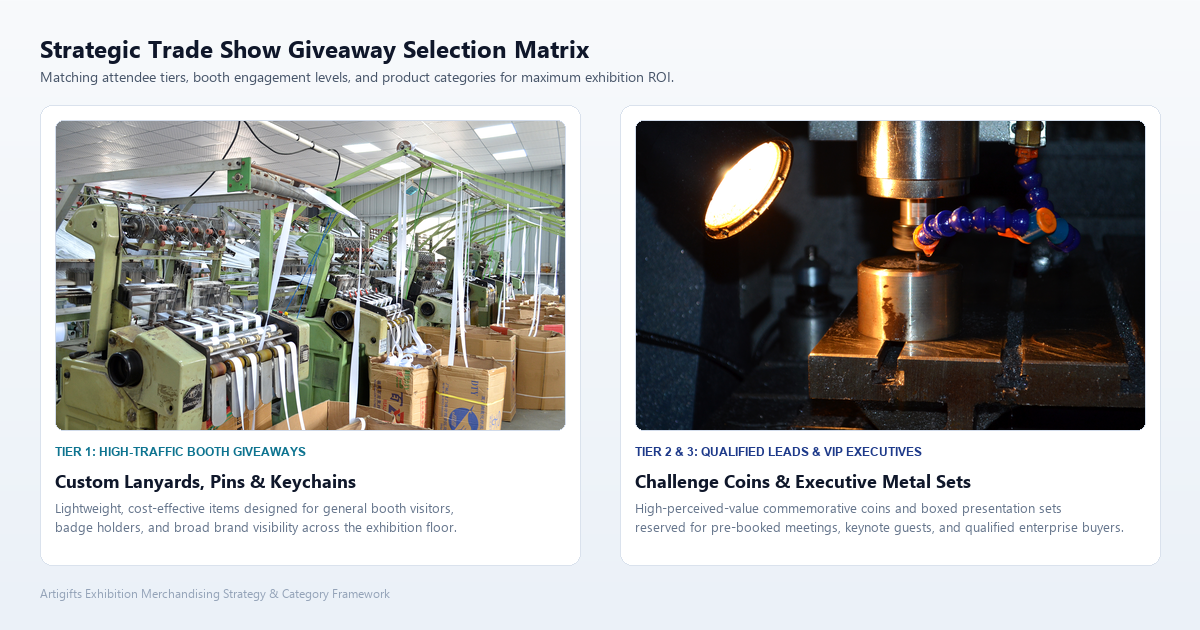
A major error made by trade show exhibitors is treating all booth visitors identically. A high-performing event merchandising plan divides attendees into three distinct engagement tiers, aligning product categories, unit budgets, and distribution methods accordingly.
Objective: Attract attendees into the booth, initiate conversations, and provide a wearable or portable brand reminder.
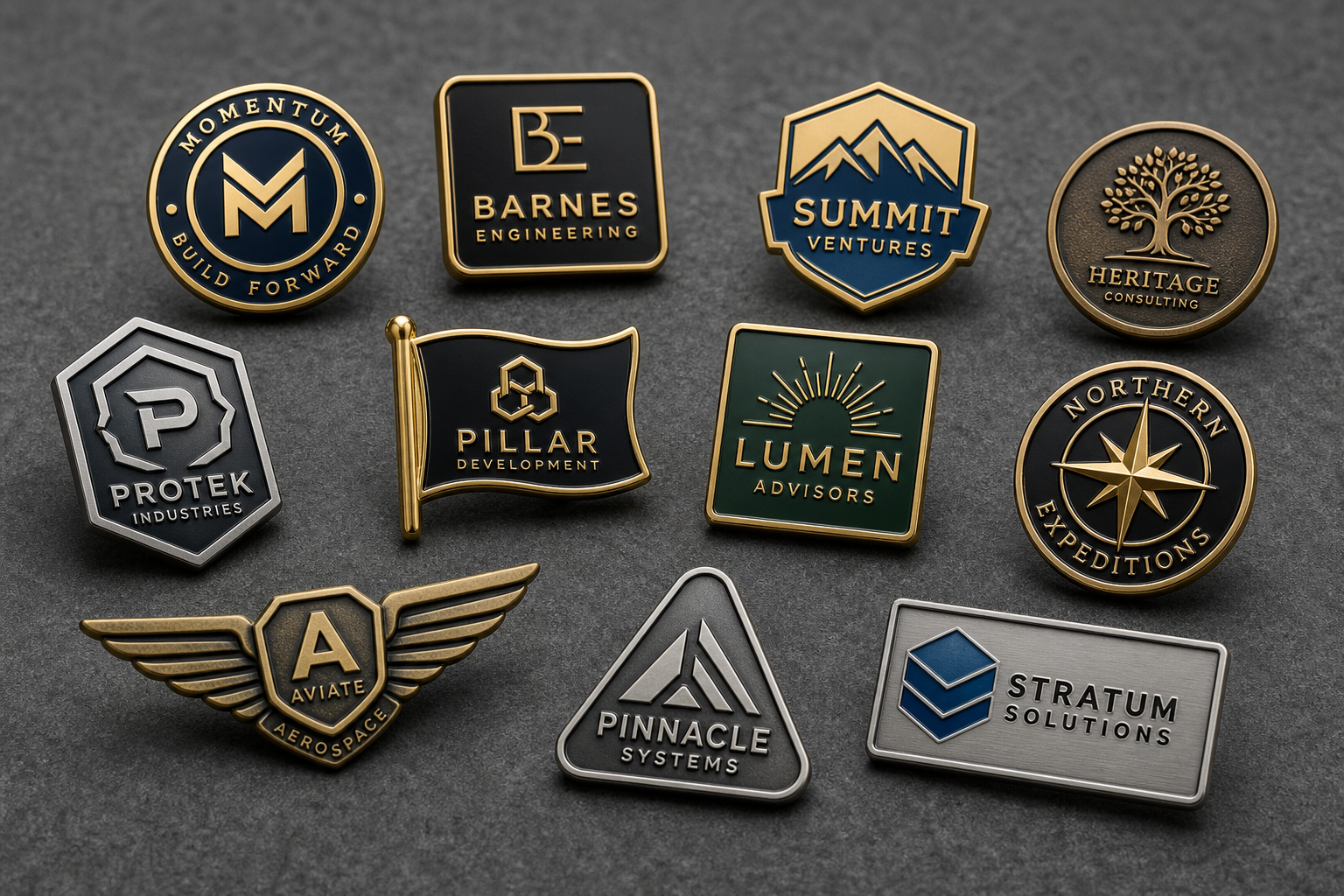
Recommended Items: Custom soft enamel lapel pins, branded woven lanyards, and custom trolley coin keychains.
Key Characteristics: Lightweight, cost-effective in bulk, visually distinctive, and immediately wearable on attendee lanyards or conference badges.
Objective: Reward attendees who participate in a 10-minute solution demonstration, complete an interactive booth survey, or engage with sales engineers.
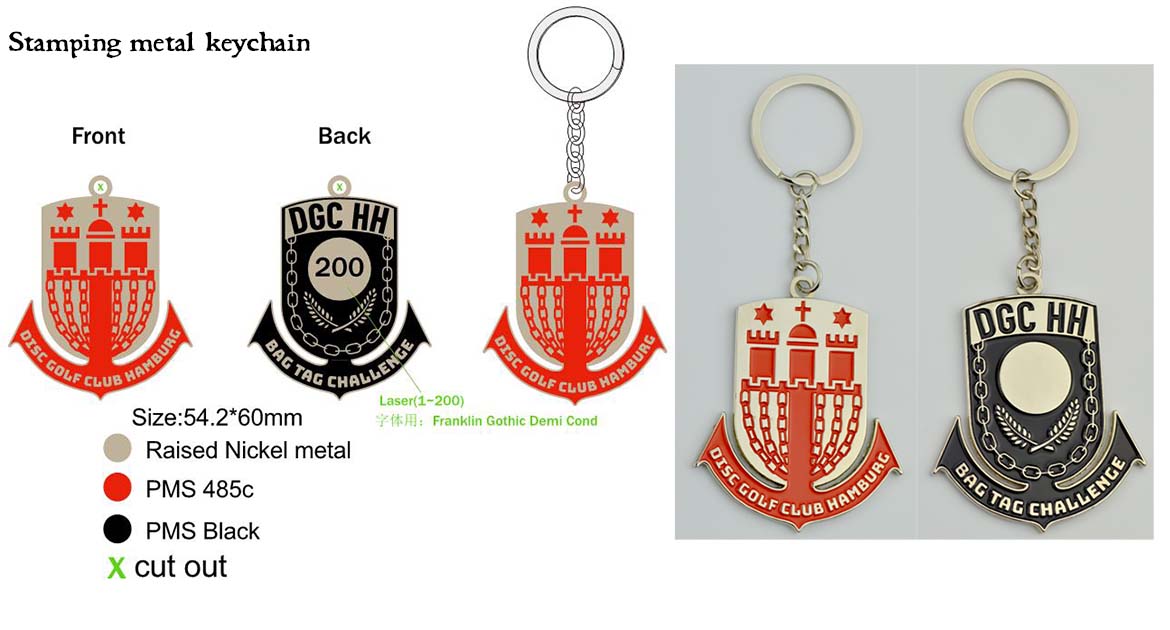
Recommended Items: Multi-functional zinc alloy keychains with integrated bottle openers, die-cast metal bookmarks, and commemorative event badges.
Key Characteristics: High daily utility, substantial hand-feel, precision laser engraving, and individual retail-grade packaging.
Objective: Solidify enterprise relationships, commemorate partnership milestones, and provide a prestigious executive keepsake.
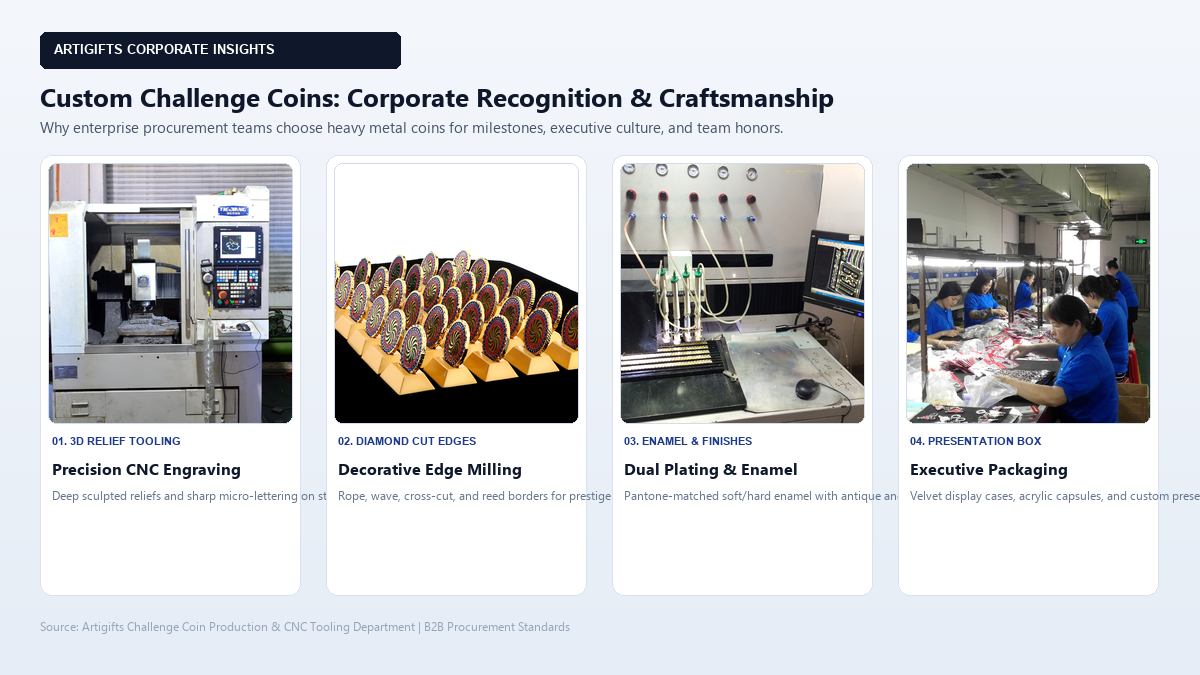
Recommended Items: Custom 3D dual-plated challenge coins in velvet presentation boxes, framed commemorative award medals, and executive metal gift sets.
Key Characteristics: Heavyweight gauge, intricate relief details, velvet display cases, and heirloom-level perceived value.
The following matrix outlines how corporate event planners can balance unit costs, production lead times, and attendee impact across different trade show engagement stages:
| Engagement Tier | Target Audience | Recommended Format | Typical Unit Weight | Primary Strategic Value | Key Production Consideration |
|---|---|---|---|---|---|
| Tier 1: Broad Traffic | General booth visitors & badge collectors | Custom soft enamel lapel pins & lanyards | 10–25 g | Instant wearable visibility & conversation starter | Standard clutch attachment, bright corporate enamel colors |
| Tier 2: Engaged Leads | Demo attendees & qualified prospects | Heavy-duty metal keychains & bottle openers | 35–65 g | Daily pocket utility & persistent brand exposure | High-durability electroplating, scratch-resistant clear coating |
| Tier 3: Executive VIPs | C-suite guests, keynote speakers & partners | 3D commemorative challenge coins in presentation boxes | 70–120 g | Prestigious milestone recognition & desktop display | Antique brass/silver dual plating, diamond-cut edges |
| Tier 4: Staff & Crew | Internal booth staff & brand ambassadors | Unified custom metal badges & uniform insignia | 15–30 g | Professional brand consistency & team cohesion | Magnetic backings to protect formal business attire |
Even the most creative trade show giveaway fails if it creates logistical friction for your team or your attendees. Procurement managers should evaluate three operational criteria before signing off on manufacturing orders:
Shipping Volume and Booth Storage Density: Exhibition hall drayage fees and booth storage closets are notoriously expensive and constrained. Compact metal items—such as lapel pins and flat keychains—pack densely into export cartons, reducing freight expenses and fitting easily under reception counters.
Luggage and Airport Security Compliance: Event giveaways must pass easily through airport TSA and international security checkpoints without sharp protrusions, hazardous components, or liquid restrictions.
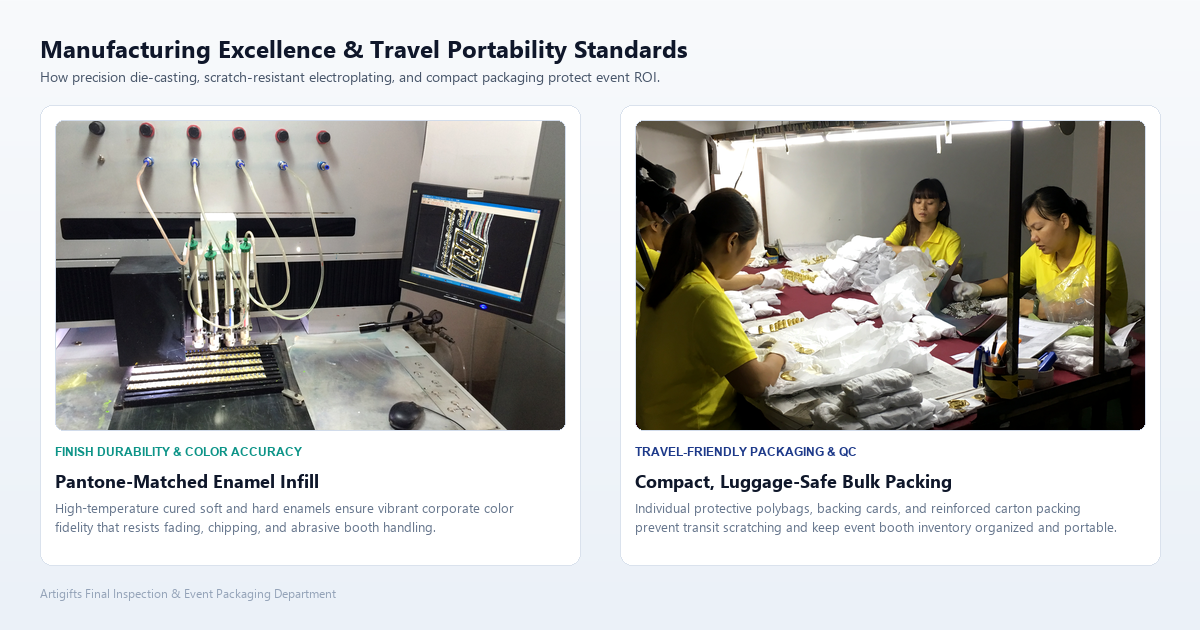
Protective Packaging for Travel: Individual polybags with custom backing cards prevent metal-on-metal friction during transit, keeping gifts pristine until presented to attendees.
With decades of specialized manufacturing experience in custom metal crafts, Artigifts partners with international B2B distributors, marketing agencies, and enterprise brands to deliver complete event merchandising solutions:
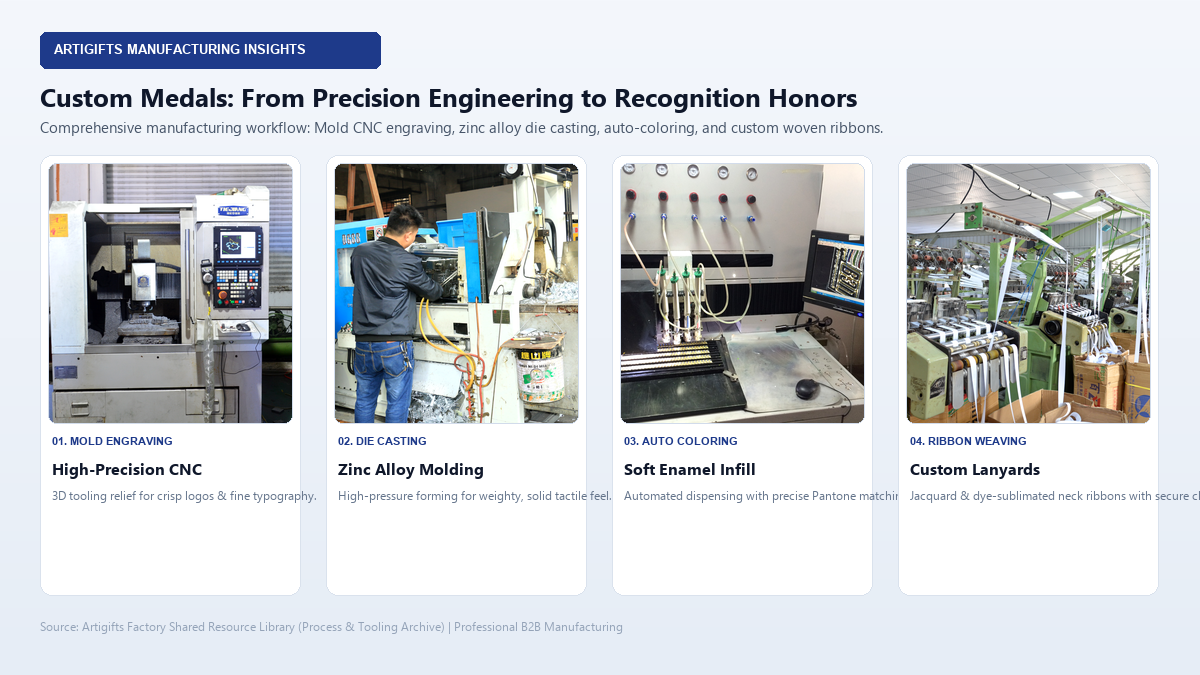
Factory-Direct Customization: In-house mold engraving, precision zinc alloy die-casting, automated soft/hard enamel coloring, and multi-tone electroplating ensure flawless brand logo fidelity.
Flexible Tiered Production: Support for mixed-category order structures—combining thousands of volume lapel pins with smaller batches of VIP challenge coins under a unified project schedule.
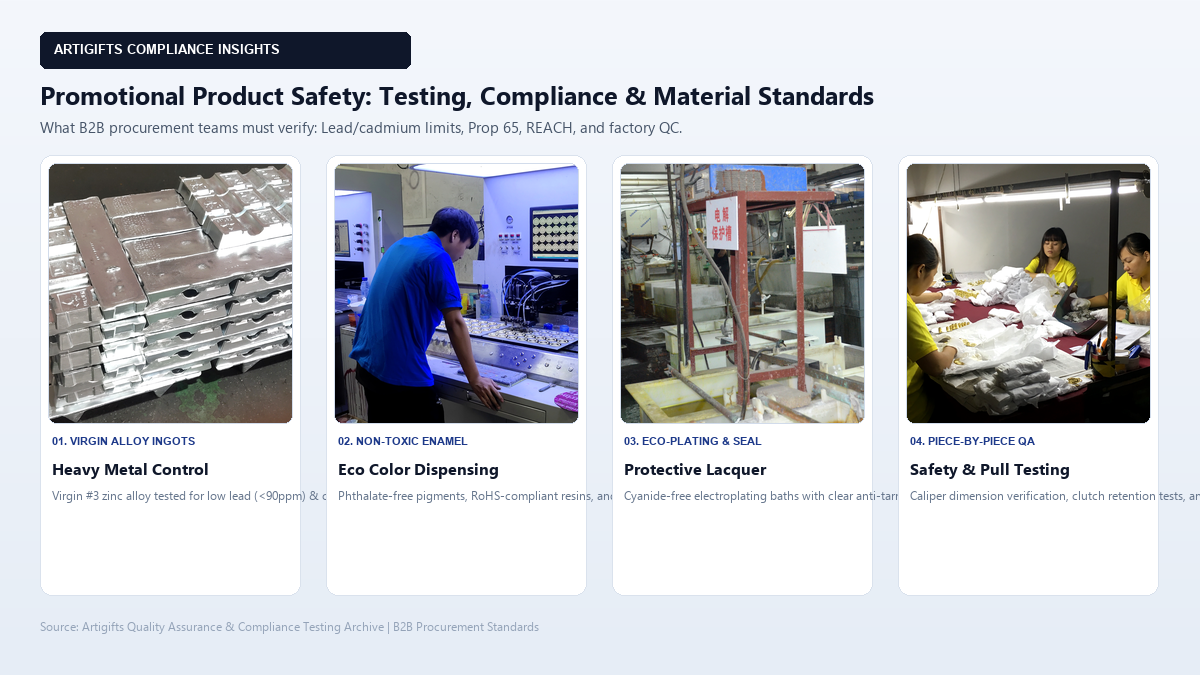
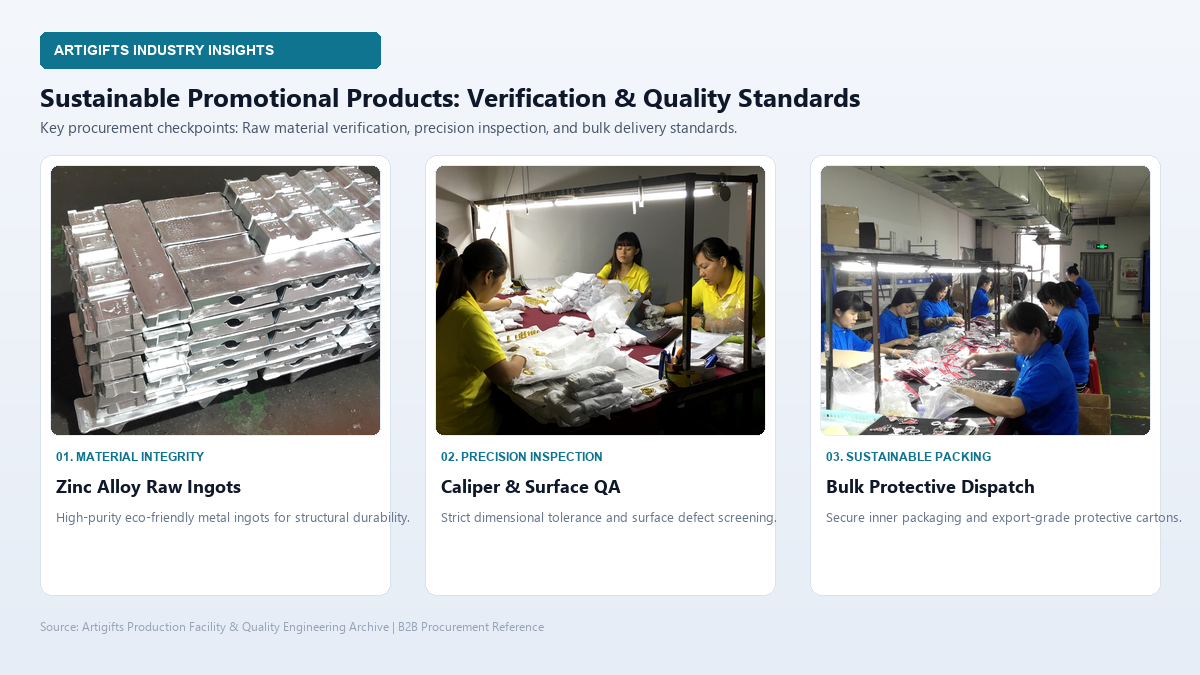
Comprehensive Quality Control: Piece-by-piece dimensional inspection, pull-testing on attachments, and smooth deburring guarantee safe, burr-free products that meet international consumer standards.
Export-Grade Packaging: Individual backing cards, custom-printed blister packs, velvet pouches, and reinforced export cartons protect products throughout international transit.
An effective trade show giveaway combines immediate relevance to your brand, high everyday utility for the recipient, compact portability for travel, and durable craftsmanship that prevents premature disposal.
Custom metal items—such as zinc alloy lapel pins, keychains, and challenge coins—provide substantial tactile weight, superior visual prestige, and long-term durability. Unlike plastic items that degrade or crack, metal gifts retain their aesthetic appeal and perceived value for years.
Order quantities depend on expected booth traffic and attendee tiers. A standard rule of thumb is to prepare Tier 1 items (lapel pins/lanyards) for 15–25% of total registered attendees, Tier 2 items for 100% of target qualified lead goals (e.g., 200–500 units), and Tier 3 VIP gifts for pre-scheduled executive meetings (e.g., 30–100 units).
Standard production for custom metal promotional items typically requires 12–18 business days after digital artwork approval, plus 3–5 days for international express courier delivery. Placing orders 4–6 weeks prior to the event allows ample time for proofing, pre-production sample approval, and contingency buffer.
Yes. In addition to traditional butterfly clutches and rubber caps, exhibitors can specify magnetic backings. Magnetic attachments secure firmly through suit lapels, dress shirts, and blazers without piercing fabric threads.
ROI can be tracked by attaching unique QR codes to custom backing cards leading to event-specific landing pages, tracking booth badge scans required before receiving Tier 2/3 gifts, and monitoring post-show sales pipeline conversion rates among gift recipients.
Trade show giveaways are an extension of your brand’s promise and visual identity. By moving away from disposable novelties and embracing high-utility, beautifully crafted custom metal merchandise, B2B organizations can ensure their marketing investment delivers measurable booth engagement, qualified sales discussions, and enduring brand recall.
PPAI Research (Promotional Products Association International): Product Power 2026: What Consumers Want Next — Consumer retention rates, emotional appreciation, and merchandise durability findings.
PPAI Research: New Year, New-ish Trends in Promotional Products — Shifting buyer priorities toward quality, customization, and sustainable merchandise.
Incentive Research Foundation (IRF): 2026 Trends Report on Corporate Recognition and Event Gifting — Insights into experiential event gifts and tangible brand connections.
Incentive Marketing Association (IMA): Corporate Event Merchandise & Recognition Insights — Best practices for employee and client engagement at industry exhibitions.